Quick answer
Tiny home down payments in 2026 range from 0% to 25% depending on loan type. RV loans require 10-20%. Chattel loans require 5-15%. FHA mortgages require 3.5%. VA and USDA mortgages allow 0% down for qualifying buyers. Personal loans require no down payment but cap at $50K. On a $54,899 unit, plan for $1,920-$10,980 down depending on which path fits.
Why down payment varies so much
Down payment is the lender’s first-line risk protection. The more skin you have in the deal, the lower the lender’s exposure if you default. Different loan products price that risk differently — and on tiny homes specifically, the spread between minimums (0%) and conservative requirements (25%) is one of the widest in consumer lending.
Down payment by loan type
| Loan type | Min down | Typical down | Notes |
|---|---|---|---|
| VA mortgage | 0% | 0-5% | Military service required |
| USDA Rural mortgage | 0% | 0-5% | Income limits + rural location |
| FHA mortgage | 3.5% | 3.5-10% | Most accessible mortgage path |
| Conventional mortgage | 5% | 5-20% | Lower down often means PMI |
| Chattel loan | 5% | 10-15% | HUD units on leased land |
| RV loan | 10% | 10-20% | RVIA park models |
| Personal loan | 0% | 0% | Unsecured; no collateral |
| Builder in-house | 0-5% | 5-15% | Higher rate offsets lower down |
Real-world down payment examples
Here’s what down payment actually looks like in dollars on three common scenarios:
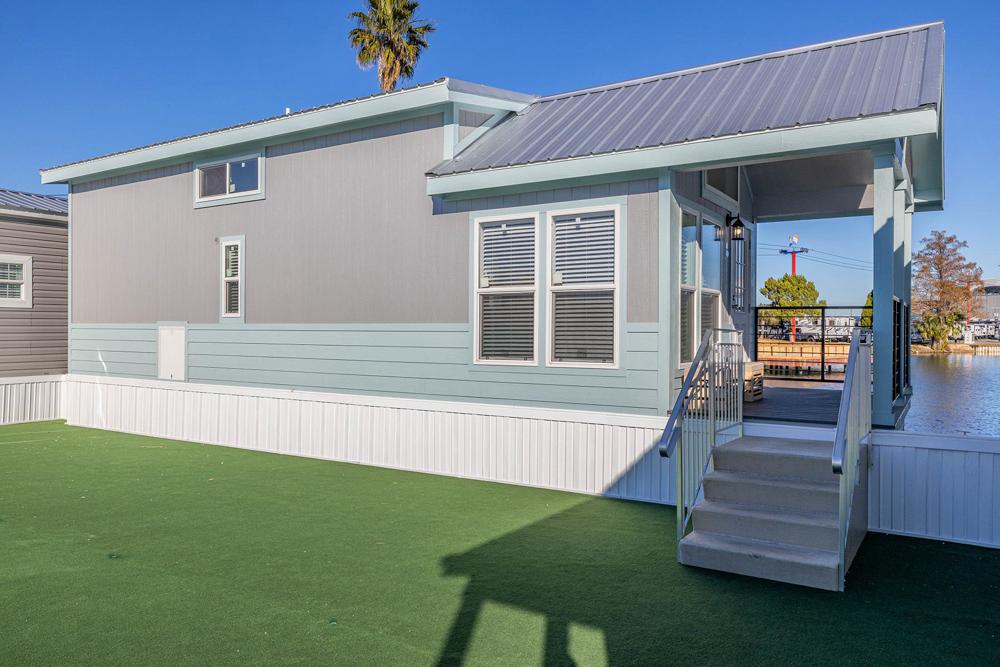
Scenario A: $42,899 RVIA park model (Hayden or Cedar Ridge)
- RV loan, 15% down: $6,435 down, $36,464 financed
- RV loan, 10% down: $4,290 down, $38,609 financed
- Personal loan, 0% down: $0 down, $42,899 financed (higher rate)
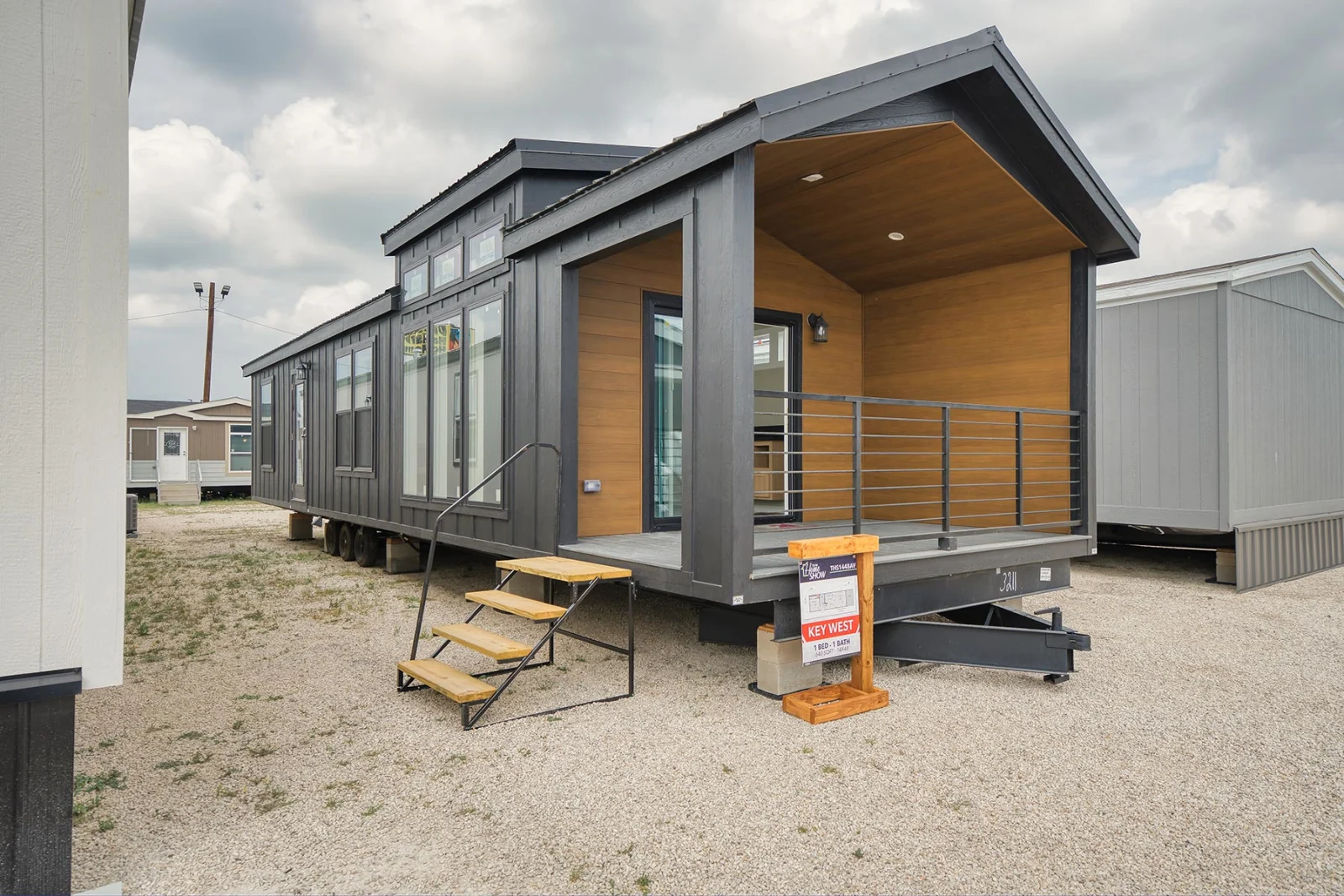
Scenario B: $54,899 HUD-code single wide (Key West)
- FHA mortgage, 3.5% down: $1,921 down, $52,978 financed
- Chattel loan, 10% down: $5,490 down, $49,409 financed
- Conventional mortgage, 10% down: $5,490 down + PMI
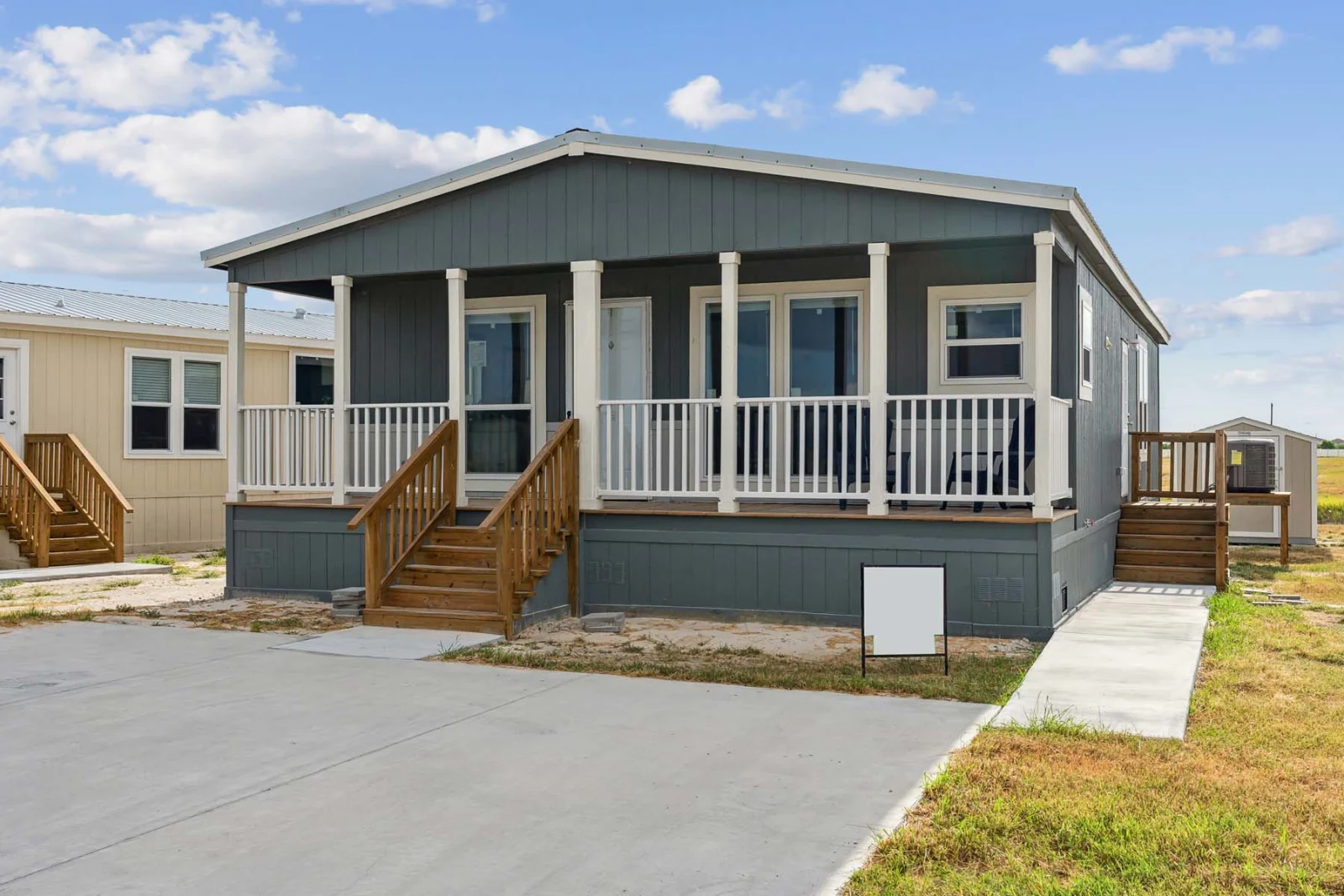
Scenario C: $77,899 HUD-code 3-bed (Birch)
- FHA mortgage, 3.5% down: $2,726 down, $75,173 financed
- Conventional, 5% down: $3,895 down, $74,004 financed + PMI
- Conventional, 20% down: $15,580 down, $62,319 financed, no PMI
5 ways to lower your down payment
1. Choose FHA over conventional
Drops minimum down from 5% to 3.5%. On a $55K unit that’s a $824 cash difference at signing.
2. If you’ve served, use VA
0% down on a tiny home that meets VA’s minimum property requirements. The VA loan also waives PMI permanently. Best deal in tiny home lending if you qualify.
3. Look at USDA Rural for rural land
0% down, income-limited but generous (up to about $113K household income for a couple in 2026), available on properties in USDA-eligible rural zones. The eligibility map covers a surprising amount of the country — check your address.
4. Use down payment assistance programs
Several states offer down payment assistance grants for first-time buyers, manufactured-home buyers specifically, or rural buyers. Texas Department of Housing has multiple programs; California, North Carolina, and Tennessee all have similar options. Talk to a HUD-approved housing counselor.
5. Negotiate seller credits
Some builders will roll closing costs into the price (effectively reducing your cash-to-close requirement) when you sign during slow periods or off-stock units. Ask explicitly for a closing cost credit instead of a price reduction; the math on cash-to-close often works out better that way.
Information gain: the “PMI threshold” nobody talks about
On conventional mortgages, putting less than 20% down triggers Private Mortgage Insurance (PMI), typically 0.5-1.0% of the loan annually. On a $75K loan, PMI runs $375-$750/year — about $31-$63/month added to your payment until you reach 20% equity.
The math: putting 5% down vs 20% down on a $77,899 Birch saves you $11,685 cash up front but costs you roughly $50/month in PMI for 7-10 years, totaling $4,200-$6,000 in PMI payments. If you have the cash, going to 20% saves money over the life of the loan. If cash is tight, accept PMI and put the difference into emergency reserves — cash flexibility is usually worth more than the PMI cost.
How to budget your down payment
Down payment is one piece of cash-to-close. The full picture:
- Down payment (3.5-25% of unit price)
- Closing costs (typically 2-5% of loan amount)
- Site prep + utility deposits ($3,500-$18,000)
- Insurance binder (first year, $400-$1,800)
- Permits ($150-$2,400)
- Reserves (lenders often want 2-6 months of payments in the bank)
On a $55K unit financed FHA, total cash-to-close including site prep typically lands $9K-$22K depending on location.
Get a real number for your situation
Send your target unit, credit range, and zip to /tiny-home-financing/ and we’ll come back with a specific cash-to-close estimate inside one business day. Or browse current inventory to see which models match your budget.