Quick answer
Yes, you can finance a tiny home with bad credit (540-639) in 2026. Realistic options: builder in-house programs (down to 540), chattel specialists like Vanderbilt and Triad (down to 580), buy-here-pay-here dealers (down to 520), and co-signed personal loans. Expect rates 11-16% and down payments 15-25%. A 90-day credit rebuild can move many buyers from non-prime to prime tier.
What “bad credit” actually means in tiny-home lending
Lenders use rough credit tiers, and the cutoffs are tighter than most people realize:
- 740+ — super prime, best rates available.
- 660-739 — prime, standard rates.
- 620-659 — near-prime, slightly higher rates.
- 580-619 — non-prime, requires specialty lenders.
- 540-579 — subprime, builder in-house or buy-here-pay-here.
- Under 540 — rebuild credit before applying or use a co-signer.
The truth that gets lost in financing articles: scores between 580 and 659 are not a death sentence. Plenty of tiny-home buyers in this range close every month. The rate is higher and the down payment is bigger, but the deal happens.
Lenders that approve bad credit in 2026
| Lender | Min credit | Loan type | Typical rate | Notes |
|---|---|---|---|---|
| Vanderbilt Mortgage | 580 | Chattel/mortgage | 9.99-13.49% | Owned by Berkshire; specialty in mfd |
| Triad Financial | 580 | Chattel | 10.49-13.99% | Park-friendly; flexible income docs |
| 21st Mortgage | 600 | Chattel/mortgage | 9.49-12.49% | Largest mfd lender in U.S. |
| Builder in-house | 540 | Personal/chattel | 11.99-14.99% | Rate offsets approval risk |
| OneMain Financial | 580 | Personal | 11.99-15.99% | Caps around $20K-$50K |
| Upstart | 580 | Personal | 10.99-14.99% | Uses non-credit factors in underwriting |
| Local credit unions | varies | RV/personal | 9.99-13.49% | Membership often forgives 60-80 points |
What to expect at non-prime credit tiers
Real numbers from buyers I’ve helped close at 580-619 credit in the past 12 months:
- Down payment: 15-25% required vs 5-10% at prime.
- Interest rate: 4-6 percentage points higher than prime.
- Term: Often capped 5 years shorter than max.
- Monthly cost: 30-50% higher payment on the same unit and same loan amount.
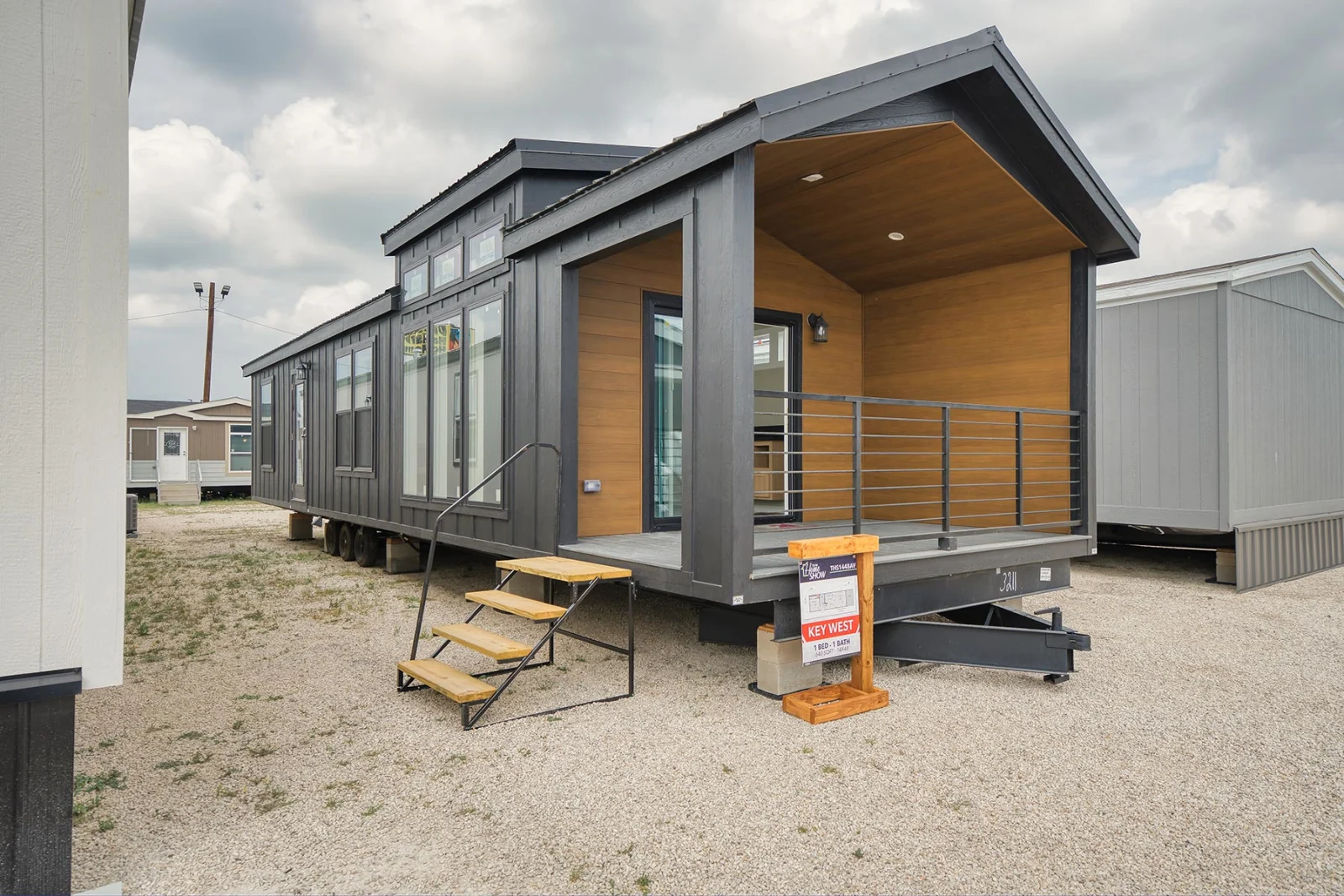
On a $54,899 Key West with 20% down at 12.99% over 15 years: monthly payment $556. The same unit at 7.99% prime rate over 20 years with 10% down: $413/month. Same home, same buyer, very different monthly burden.
The 90-day credit rebuild plan
If you’re between 580 and 660 and not in a hurry, three months of focused work can move your score 30-80 points. The math: 30 points often equals 1.5-2.5 percentage points off your interest rate, which on a $50K loan over 15 years saves $4,500-$8,000 in total interest.
Days 1-7
- Pull your credit report from all three bureaus (annualcreditreport.com).
- Dispute any inaccuracies (typical 30-day resolution).
- Pay down revolving balances to under 10% of credit limit on each card. Utilization is the fastest lever.
Days 8-30
- Set every account to autopay minimum. Late payments destroy scores.
- Add a secured credit card if you don’t have positive trade lines (3-4 active accounts is the score sweet spot).
- Become an authorized user on a family member’s long-history card if available.
Days 31-90
- Maintain low utilization across the cycle (don’t spike before statement date).
- Pull score weekly via Credit Karma to track movement.
- Re-apply for tiny-home pre-qualification at day 90 once new lower utilization has reported.
Information gain: the co-signer math
Adding a co-signer with 700+ credit is the single fastest way to fix a bad-credit tiny-home application. The co-signer’s score effectively replaces yours for underwriting. Approval moves from “maybe” to “yes” and the rate often drops 3-5 percentage points.
The asymmetry buyers miss: the co-signer’s downside is real (their credit takes the hit if you default, and the loan counts against their DTI for their own borrowing) but their upside is zero. Make this conversation honest. Offer the co-signer a documented release-from-cosigner clause once you’ve made 24 months of on-time payments — most lenders will release a co-signer at that point if your standalone profile has improved.
What to avoid
- Lenders that won’t name the rate up front. “Rate determined at closing” is a red flag for predatory pricing.
- Mandatory add-on insurance products that double the loan cost. Read the disclosure.
- Pre-payment penalties. If your credit improves and you want to refinance in 2 years, a pre-pay penalty traps you in the bad-credit rate.
- Verbal “guarantees” from dealers without a written rate sheet. Always get the rate, term, and total finance charge in writing before signing.
Get matched to a non-prime program
Send your credit range, target unit, and zip to /tiny-home-financing/ and we’ll route to lenders that approve in your tier. The pre-qualification soft-pull doesn’t affect your score and returns inside 24-72 hours. Or browse our most affordable units first to see what total cost looks like at non-prime rates.