Quick answer
You can get a mortgage on a tiny home in 2026 if four conditions are met: (1) the unit is HUD-code or modular construction, (2) it sits on a permanent foundation, (3) it’s on owned land titled as real property, and (4) it meets the lender’s minimum square footage (typically 400-1,000 sq ft). Conventional, FHA, VA, and USDA mortgages are all available when you qualify.
The mortgage question, settled
The single most-Googled tiny-home financing question is “can you get a mortgage on a tiny home,” and the honest answer is “yes, sometimes — here are the rules.”
Most park model RVs do not qualify because they’re titled as vehicles. Most foundation-ready cottages and HUD-code single wides on owned land do qualify. The rules below tell you which side of that line you fall on.
The 4 conditions for a tiny home mortgage
Condition 1: Construction code
The unit must be HUD-code (built to 24 CFR 3280) or modular (built to your state’s residential building code). RVIA-certified units rarely qualify because they carry a vehicle title. The data plate or HUD label tells you which code applies — check it before you fall in love with a unit.
Condition 2: Permanent foundation
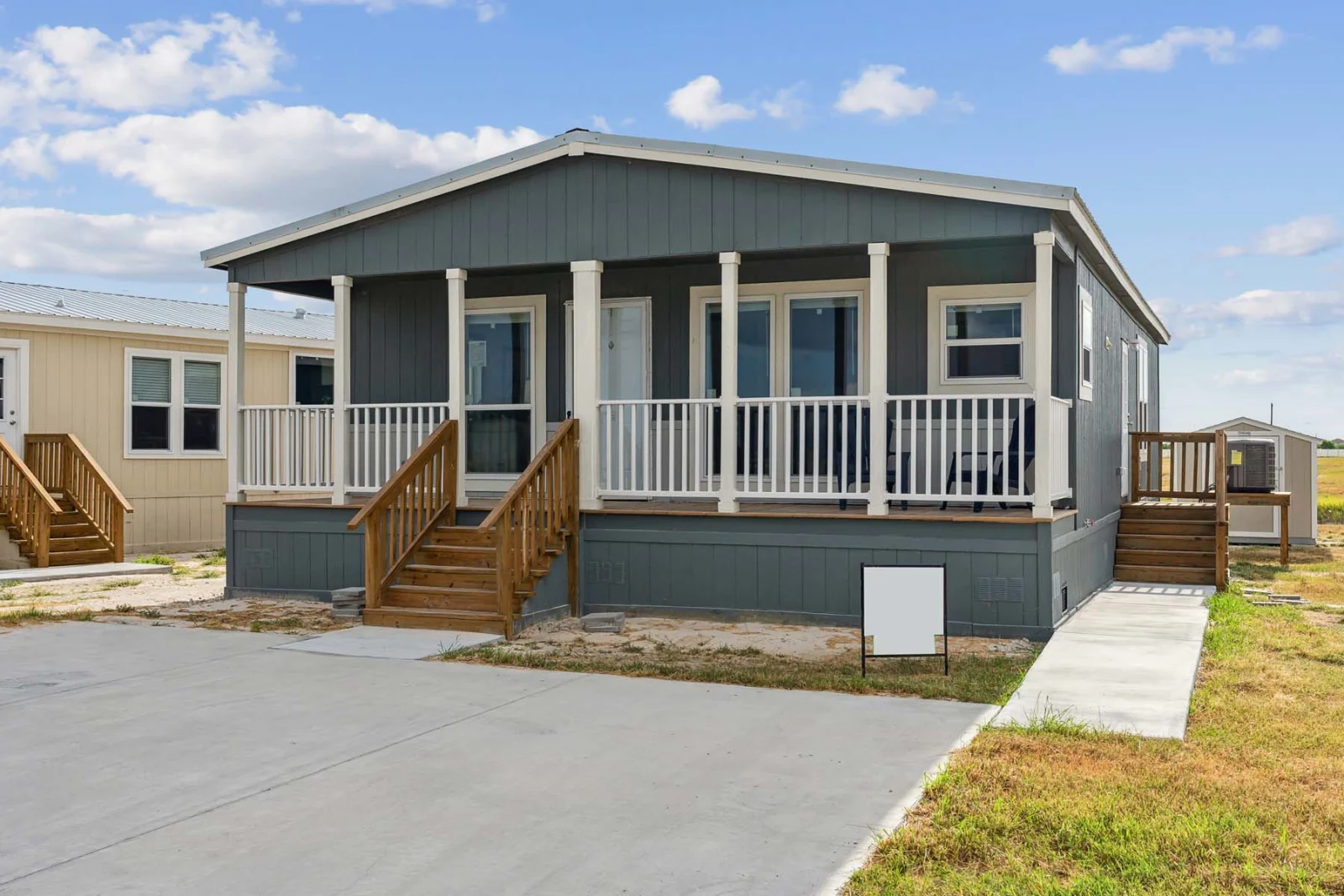
The home must be permanently affixed to a foundation per HUD or local code. Concrete piers anchored to footings, full slab, basement, or a permanent crawl space all qualify. The chassis (if present) must be either removed or anchored, and the home cannot have wheels or a hitch attached.
Condition 3: Real property title
The home must be titled as real property — meaning it appears on the county tax roll as part of the land parcel, not as a separate vehicle. If your unit currently has a DMV title, you’ll need to file a title surrender (also called “converting to real property”) before mortgage closing. Most counties charge $150-$400 for this and process in 2-6 weeks.
Condition 4: Minimum square footage
Lender minimums vary. FHA and most conventional manufactured-home programs require 400 sq ft minimum. Some conventional lenders push to 600 or 1,000 sq ft. VA and USDA typically follow FHA’s 400 sq ft floor. Verify with the specific lender before you order a smaller unit.
Mortgage type comparison
| Mortgage type | Min sq ft | Min credit | Min down | Typical rate (2026) |
|---|---|---|---|---|
| Conventional (Fannie/Freddie) | 400-600 | 620 | 5% | 6.99-7.99% |
| FHA | 400 | 580 | 3.5% | 6.49-7.49% |
| VA (military) | 400 | 580 typical | 0% | 6.25-7.25% |
| USDA Rural | 400 | 640 | 0% | 6.49-7.49% |
| Manufactured-home (chattel-to-mortgage convert) | varies | 620 | 10% | 7.49-8.49% |
The FHA loophole most buyers miss
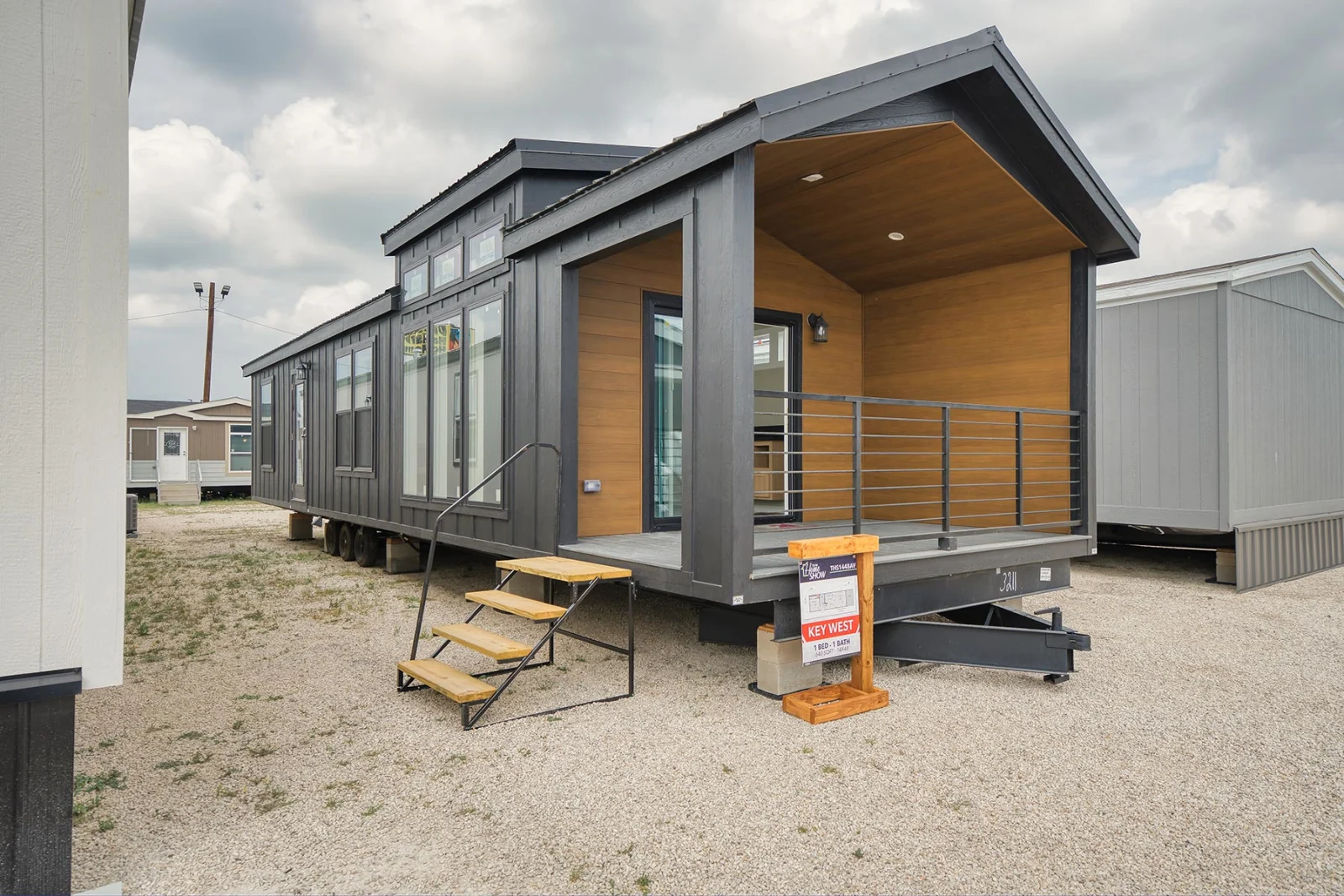
FHA Title II mortgages explicitly cover HUD-code manufactured homes on permanent foundations — including units as small as 400 sq ft. Combined with FHA’s 580 minimum credit score and 3.5% minimum down payment, this is the most accessible mortgage path for tiny home buyers in 2026. Our Key West (640 sq ft, $54,899) and Homestead (840 sq ft, $75,899) both qualify when set on a permanent foundation on owned land.
The 6-step mortgage process
- Pre-approval (5-10 days). Pull a pre-approval letter from a manufactured-home mortgage lender, not your generic bank.
- Pick a unit and confirm spec. HUD label visible, square footage above lender minimum, foundation plan engineered.
- Land verification (5-10 days). Survey, title work, real-property tax assessment confirmed.
- Appraisal (10-21 days). Appraiser uses manufactured-home or modular comps within typically 25 miles.
- Underwriting (10-21 days). Final income, asset, and debt review.
- Close and fund (3-5 days). Sign at title company. Funds disburse to builder and seller.
Total timeline: 30-60 days from pre-approval to keys.
Information gain: the appraisal challenge nobody warns you about
Even when your unit qualifies for a mortgage on paper, the appraisal can kill the deal. Here’s why: appraisers need 3 comparable sales of similar HUD-code or modular units within 25 miles within the past 12 months. In urban areas this is easy. In rural areas, comps are rare and the appraisal can come in below contract price.
Two protective tactics. One: ask the lender to run a comp search before you order the unit, not after. Two: structure the contract with an appraisal contingency that lets you renegotiate or walk if the appraisal comes in low. Both moves prevent the painful scenario where you’ve paid for a unit and the bank won’t fund.
When NOT to chase the mortgage
Three scenarios where a chattel or RV loan is actually the smarter choice:
- Your unit is RVIA-certified or you want to keep wheels on it — convert later if you want, but a mortgage isn’t available now.
- You want to close in under 21 days — mortgages don’t move that fast.
- You’re placing on leased land or rented lot — mortgages require owned land.
Next step
Send the unit you’re considering plus your land details to /tiny-home-financing/ and we’ll route you to the right loan product (mortgage if you qualify, chattel or RV if not) and pre-qualify you in 24-72 hours. Or browse mortgage-eligible inventory directly.
See also: tiny home insurance guide — mortgage lenders require it as a condition of closing, and the policy type depends on your unit's certification.