Quick answer
A tiny home trailer is a transportable tiny dwelling built on a chassis or trailer base. Three product categories cover almost every "tiny home trailer" you’ll see for sale: park model RVs (ANSI A119.5 certified, 399–765 sq ft, transported and set on piers, from $42,899), tiny homes on wheels (THOWs) (RVIA-certified, 100–400 sq ft, customer-towable, from ~$70,000), and manufactured tiny homes (HUD-certified, 820–1,178 sq ft, transported and set on foundations, from $70,899). Pick by use case: park models for set-and-stay placement, THOWs for actually-towed mobility, manufactured tiny homes for primary-residence permanence.
What is a tiny home trailer, exactly?
"Tiny home trailer" is the catch-all SEO term shoppers use when they’re looking for a small home built on or transported by a trailer chassis. It sounds like one product but it actually covers three very different builds, each with its own federal certification, financing track, permitting path, and lifestyle fit. Get this distinction right before you shop or you’ll burn weeks chasing the wrong product.
The three real categories of tiny home trailers (2026)
1. Park Model RVs (ANSI A119.5)
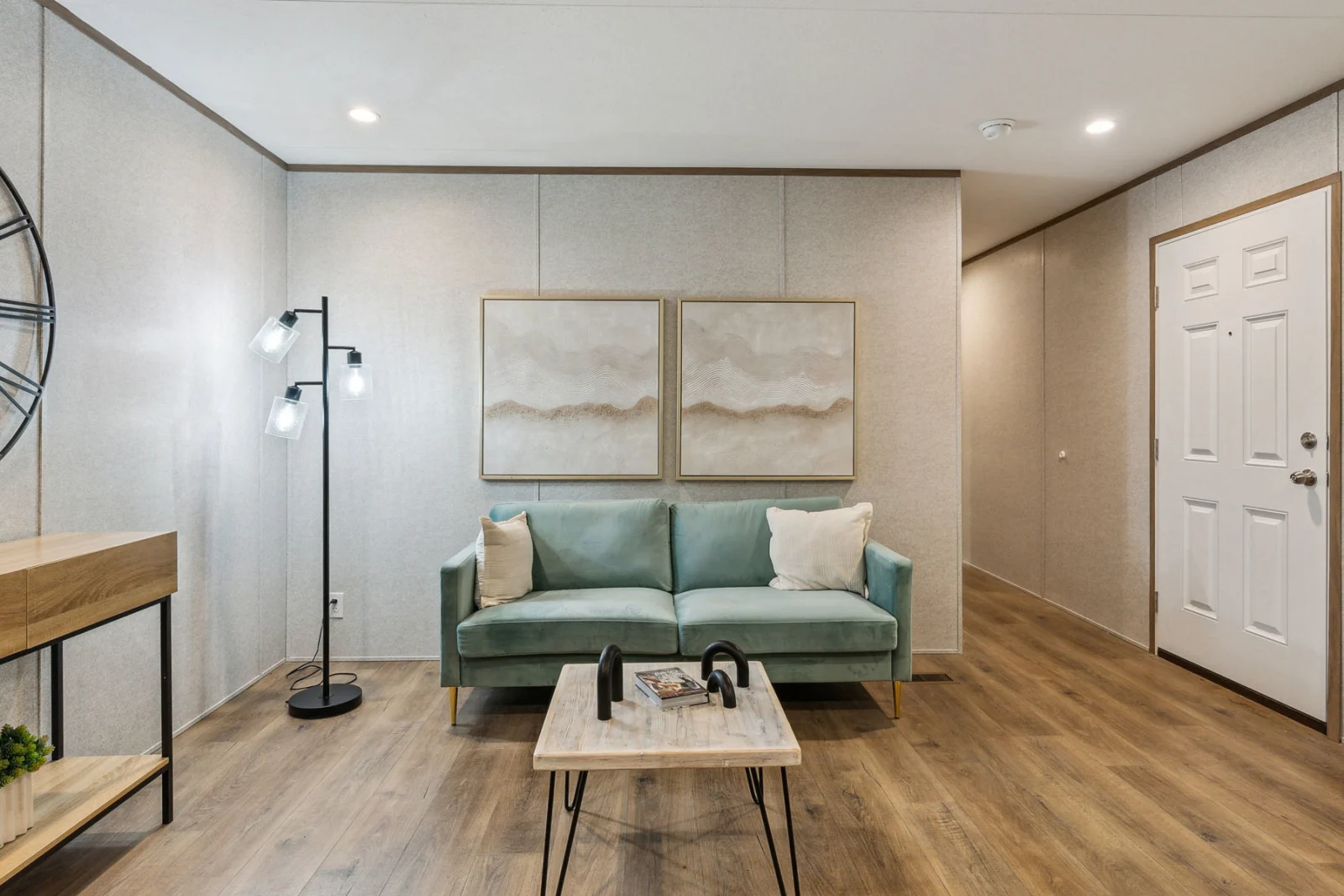
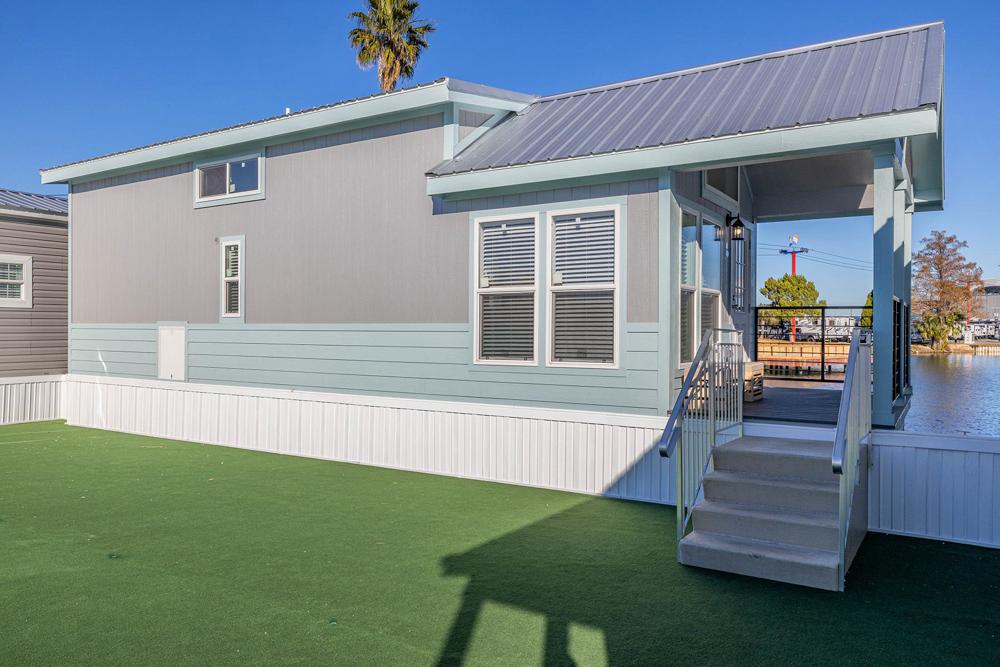
Park model RVs are the most popular "tiny home trailer" category in the US by both unit sales and dollar volume. They’re built to ANSI A119.5 certification (the recreational-park-trailer standard), legally classified as RVs by every state, and transported to your placement on their integrated steel chassis. Typical size: 399–765 sq ft, 1–2 bedrooms, full kitchen, full bath, vaulted ceiling. They look like small houses with porches because that’s exactly what they are — the chassis is hidden under skirting after placement.
Park models are designed for set-and-stay: transported once from factory to your lot, set on piers or pads, hooked up to utilities, and lived in. They’re technically road-legal under one-time transport permits but are too wide (11’6″) for civilian towing. Our Hayden, Cardinal, Cedar Ridge, Key West, and 9 other park-model floor plans start at $42,899 and ship free within 1,000 miles of Smithville, TX.
2. Tiny Homes on Wheels (THOWs)
THOWs are what most people picture when they hear "tiny home" — the Instagram-famous 200-sq-ft cabins on a 24-foot trailer. They’re built to RVIA standards on a heavy-duty travel-trailer chassis (typically 7,000–15,000 lb GVWR), sized to be towed by a 3/4-ton or larger pickup, and engineered for repeated road life. Tumbleweed, Mint, ESCAPE Traveler, and Modern Tiny Living are the main builders in this space.
THOWs cost significantly more per square foot than park models because they’re custom-built and engineered for the trailer dynamics. Typical entry pricing: $70,000–$120,000 for 150–300 sq ft. They’re the right choice if you actually intend to tow your home (festival circuit, traveling nurse, full-time RV life). They’re the wrong choice if you’re just looking for an affordable small house on rural land — you’ll pay double per square foot for mobility you’ll never use.
3. Manufactured Tiny Homes (HUD-certified)
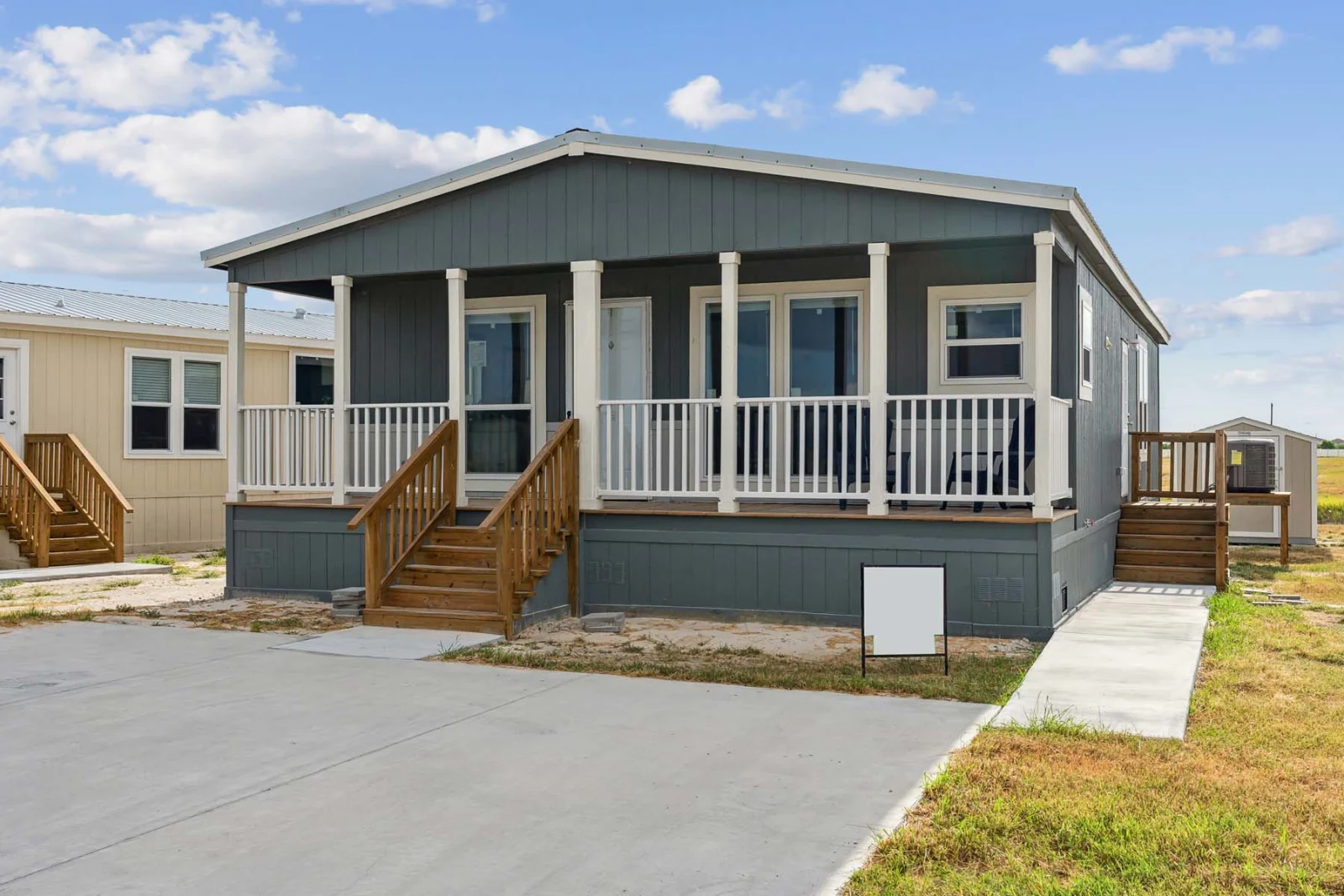
The third category is the HUD-code manufactured tiny home — typically 820–1,178 sq ft, 2–3 bedrooms, built on a permanent steel chassis but designed for foundation install (the chassis becomes part of the foundation). These are technically transported on a trailer but classified as real property once installed, financeable with chattel mortgages or even conventional mortgages on owned land.
If you want a true primary-residence tiny home (HUD-code means it qualifies as a permanent dwelling for zoning, taxation, and mortgage purposes), this is the category. Our Homestead ($75,899), Casablanca ($70,899), and Pip ($77,899) are HUD-certified. Manufactured tiny homes are the easiest of the three categories to finance through traditional lenders.
How to pick: 5 questions that determine which trailer is right for you
Will you ever actually tow it?
If yes — not "maybe someday," but actually planning to relocate it — THOW. If you’ll set it once and forget about it, park model or HUD manufactured. The 60% price premium on THOWs only pays off if you use the mobility.
Do you want it classified as a "real" house?
HUD manufactured tiny homes qualify as primary residences for zoning, mortgage, and tax purposes in most US counties. Park model RVs and THOWs are classified as RVs — lower property tax, but often restricted to RV-zoned land or accessory dwelling use.
What’s your land situation?
Own rural land? All three work. Renting an RV park slot? Park model or THOW. Putting it on residential property as an ADU? HUD-code manufactured wins in most cities.
What credit profile do you have?
HUD-code financing is the easiest tier — chattel mortgage lenders are mature, rates run 7.5–11.5%. Park-model RV loans (RVIA-equivalent) run 6.5–9.5%. THOW financing is genuinely difficult — many lenders won’t finance custom builds because the asset is illiquid.
How much usable space do you really need?
Realistically: 1 person can live in 200 sq ft (THOW range). 2 people need at least 399 sq ft (park model). Family of 3+ needs 800+ sq ft (HUD-code manufactured). Don’t fight the math — under-spec’ing tiny-home square footage is the #1 reason owners regret the purchase within 2 years.
Tiny home trailer pricing in 2026 (all-in)
"All-in" cost includes the unit, delivery, basic site prep (gravel pad or pier setup), and utility hookup coordination. It excludes land purchase, septic install, and major utility extension.
Tiny home trailer financing: 4 programs, ranked by accessibility
Each tiny home trailer category has a primary financing track. Apply to the right one and approval rates run 90%+; apply to the wrong one and you’ll bounce.
- RV / RVIA loan — for park model RVs and most THOWs. 6.5–9.5% APR, 10–20 year terms, 10–20% down. Easiest approval for buyers with 600+ credit.
- Chattel mortgage — for HUD-code manufactured homes. 7.5–11.5% APR, 15–25 year terms, 5–10% down. The home itself is collateral. Most flexible long-term option.
- Personal loan — works for any category up to about $50K. 9.99–14% APR, 3–7 year terms, no land or collateral needed. Faster approval, smaller loan amounts.
- Dealer financing — in-house programs (like our multi-lender match). 8.5–12.5% APR, no minimum credit score required. Best for buyers who’ve been turned down elsewhere.
See our full financing program comparison with current 2026 APR ranges →
Tiny home trailer placement: what permits do you need?
Permitting depends 100% on category and county. Quick rules:
- Park model RV on RV-zoned land (RV park, campground, RV subdivision): no building permit needed in most states. Owner pays RV registration only.
- Park model RV on private rural land: most rural counties allow it as long as you have a recorded septic plan. Check with your county’s planning office before delivery.
- THOW on any land: technically requires no building permit (RV classification) but is restricted by HOA, deed covenants, and city ordinances in most metros. Easier in rural counties.
- HUD manufactured tiny home on permanent foundation: standard residential building permit required. Permit timeline 4–8 weeks in most jurisdictions.
- Anywhere with an HOA: read your CC&Rs carefully. Many HOAs explicitly prohibit manufactured housing and RVs. A foundation-set modular sometimes works as a loophole.
Where Tiny Homes USA fits in the tiny home trailer market
We build all three categories: 13 park model RV floor plans, a growing HUD-certified manufactured tiny home lineup, and one modular (The Orion). We do not build custom THOWs — for that, Tumbleweed and Mint are the established players. We ship factory-direct (no dealer markup) with free delivery within 1,000 miles of our Smithville, TX factory.
If you’re cross-shopping us against the big builders:
- Tiny Homes USA vs Clayton Homes — we’re factory-direct, they sell through dealers
- Tiny Homes USA vs Champion Homes — we’re factory-direct, they sell through dealers (we even ship a Skyline modular)
- Tiny Homes USA vs Tumbleweed — park model vs THOW comparison
- Tiny Homes USA vs Mint Tiny Homes — US production vs Canadian custom THOW