Quick answer
Three building codes govern tiny homes in 2026: HUD 24 CFR 3280 (federal manufactured-home code, units on permanent steel chassis), ANSI A119.5 / RVIA (recreational vehicle code, park models on chassis with axles intact), and IRC / state IBC (residential building code, modular and site-built tiny homes on permanent foundations). The code your unit is built to determines zoning eligibility, financing options, insurance availability, and resale value.
Why building code is the single most important spec
The phrase “tiny home” covers three legally distinct categories of structure. They look similar in photos. They are completely different at the bank, the planning department, and the insurance underwriter. Buying the wrong code for your zoning or financing plan is the most expensive mistake in the category.
The good news: the differences are knowable and finite. The three codes below are the only ones you need to understand.
The 3 building codes for tiny homes in 2026
HUD 24 CFR 3280 (Federal Manufactured Home Construction and Safety Standards)
Federal code adopted 1976 and updated regularly. Applies to all factory-built single-family dwellings on a permanent steel chassis intended for residential use. Units are inspected at the factory, carry a red HUD label on the exterior, and a data plate inside.
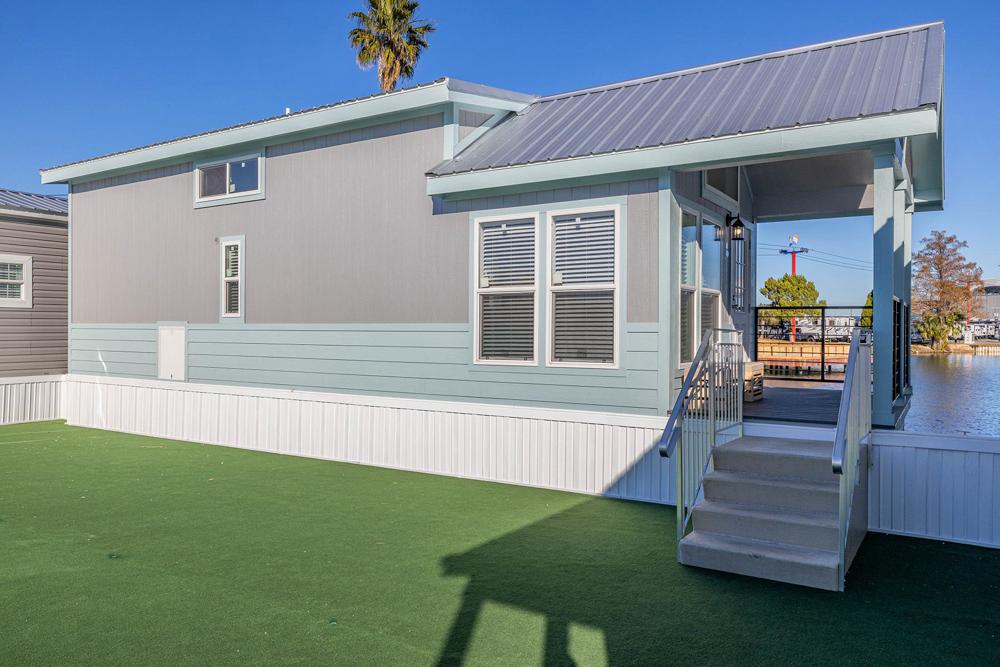
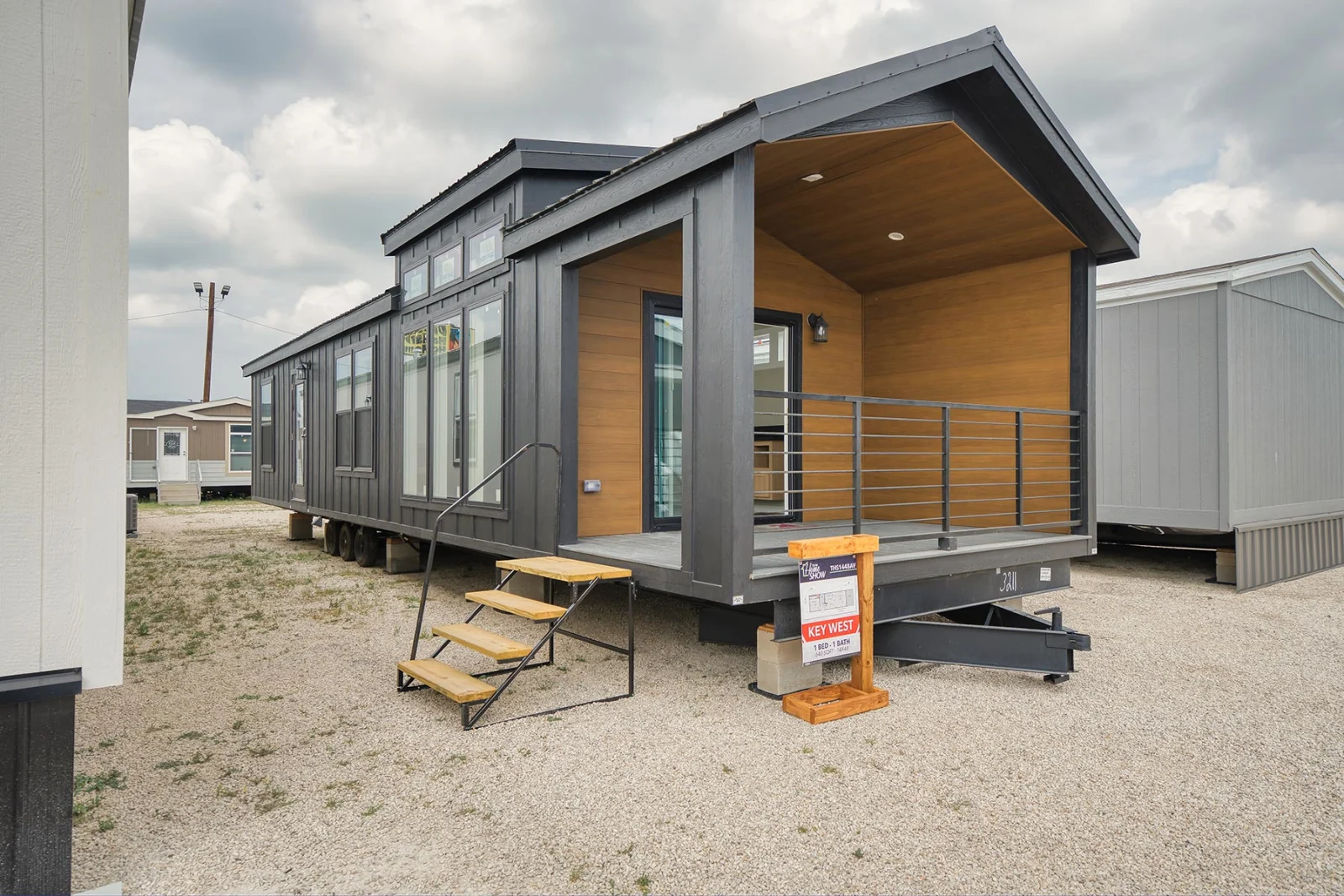
HUD-code units can be placed as permanent dwellings in nearly all U.S. jurisdictions, qualify for FHA Title II, conventional, VA, and USDA mortgages when on permanent foundations on owned land, and are insurable under manufactured-home dwelling policies. Our Key West, Homestead, and Birch are HUD-code units.
ANSI A119.5 / RVIA (Recreational Vehicle Industry Association)
Trade-association code for park model RVs and recreational vehicles. Units must be 400 sq ft or less main floor, on a chassis with axles intact, and licensed as a recreational vehicle. Units carry an RVIA seal and are titled through the DMV like vehicles.
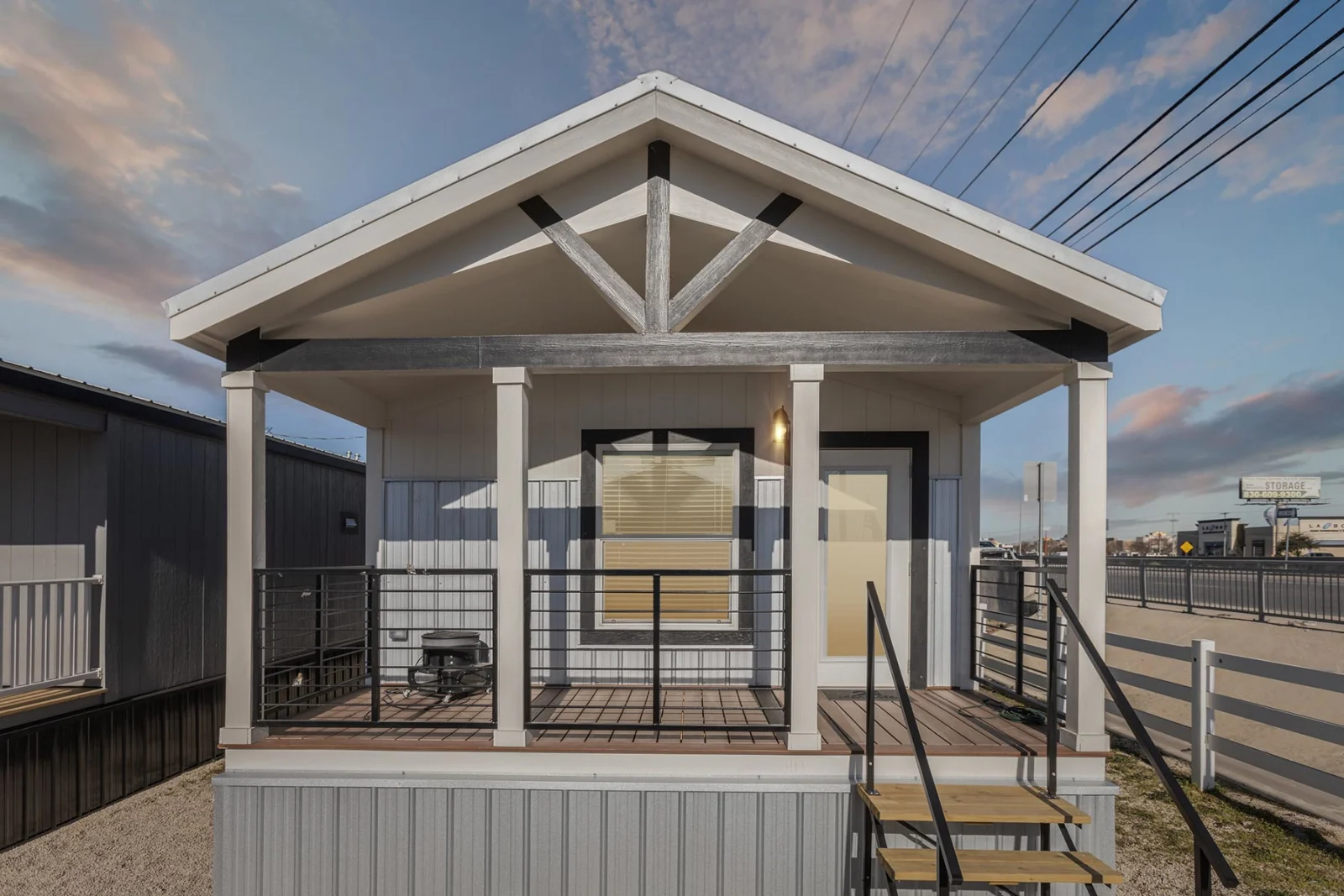
RVIA units have flexibility (can be moved legally on roads), lower zoning requirements in many rural counties, and finance through RV loans — but typically don’t qualify for traditional mortgages and are not always accepted as permanent dwellings in stricter jurisdictions. Our Hayden and Cedar Ridge are RVIA park models.
IRC / state IBC (International Residential Code or state building code)
Applies to modular homes built off-site to the same residential code as site-built homes. Modular units have no chassis, are delivered in sections, and craned onto a permanent foundation. They’re inspected by state inspectors at the factory and carry a state insignia rather than a HUD label.
Modular units appraise as site-built homes, qualify for any traditional mortgage, are accepted in nearly all single-family zones (including most HOA neighborhoods that ban manufactured housing), and resell on the same comp curve as stick-built homes.
Side-by-side comparison
| Factor | HUD-code | RVIA park model | Modular (IRC) |
|---|---|---|---|
| Code authority | Federal (HUD) | Trade assoc (ANSI) | State / local |
| Maximum size | None (typically 400-2,400 sq ft) | 400 sq ft main floor | None |
| Built on | Steel chassis (permanent) | Steel chassis with axles | No chassis — sections |
| Identification | Red HUD label + data plate | RVIA seal + VIN | State insignia + plans |
| Title | Vehicle (DMV) until converted | Vehicle (DMV) | Real property (deed) |
| Mortgage eligibility | Yes, with foundation + land | Rarely | Yes, broadly |
| Zoning acceptance | Broad (most jurisdictions) | Variable (rural OK, urban often no) | Universal in residential zones |
| Typical cost | $70-$110 / sq ft | $60-$95 / sq ft | $120-$180 / sq ft |
| 5-year resale | 70-95% of original | 55-75% of original | 80-105% of original |
How to verify which code your unit is built to
- Look for the label. HUD: red label on exterior, data plate inside. RVIA: silver oval seal near the door. Modular: state insignia (varies by state) often on data plate inside.
- Check the title. HUD and RVIA units carry a vehicle title from the DMV. Modular units title as real property to the parcel.
- Read the manufacturer specifications. The spec sheet from the builder always identifies the code the unit is built to.
- Confirm with your state’s housing or building authority. Texas is the Department of Licensing and Regulation. California is HCD. Most states have a manufactured-housing division you can call.
Information gain: the conversion question buyers miss
HUD-code units can be converted from vehicle title to real property when permanently affixed to a foundation, with the chassis anchored or removed and the title surrendered to the county. RVIA units cannot easily be converted — the certification was built around vehicle status, and loss of that status often triggers code-compliance issues.
Practical implication: if you might want a 30-year mortgage in the future, buy a HUD-code or modular unit now even if you’re paying cash today. The future financing path requires real-property status. RVIA units are a one-way door — great for current flexibility, hard to refinance into a mortgage later.
Picking the right code for your situation
- Want lowest price + maximum flexibility, OK with limited financing: RVIA park model.
- Want widest zoning acceptance + traditional financing eligibility, balanced cost: HUD-code.
- Want strongest resale + universal zoning + appraisal parity with site-built: Modular (state IRC).
Get a code-specific quote for your zoning and financing path at /contact-tiny-homes/. For the upstream zoning verification process, see our county zoning guide and permits article.
See also: manufactured home vs modular home and park model RV vs tiny home for product-level comparisons that map onto these three codes.