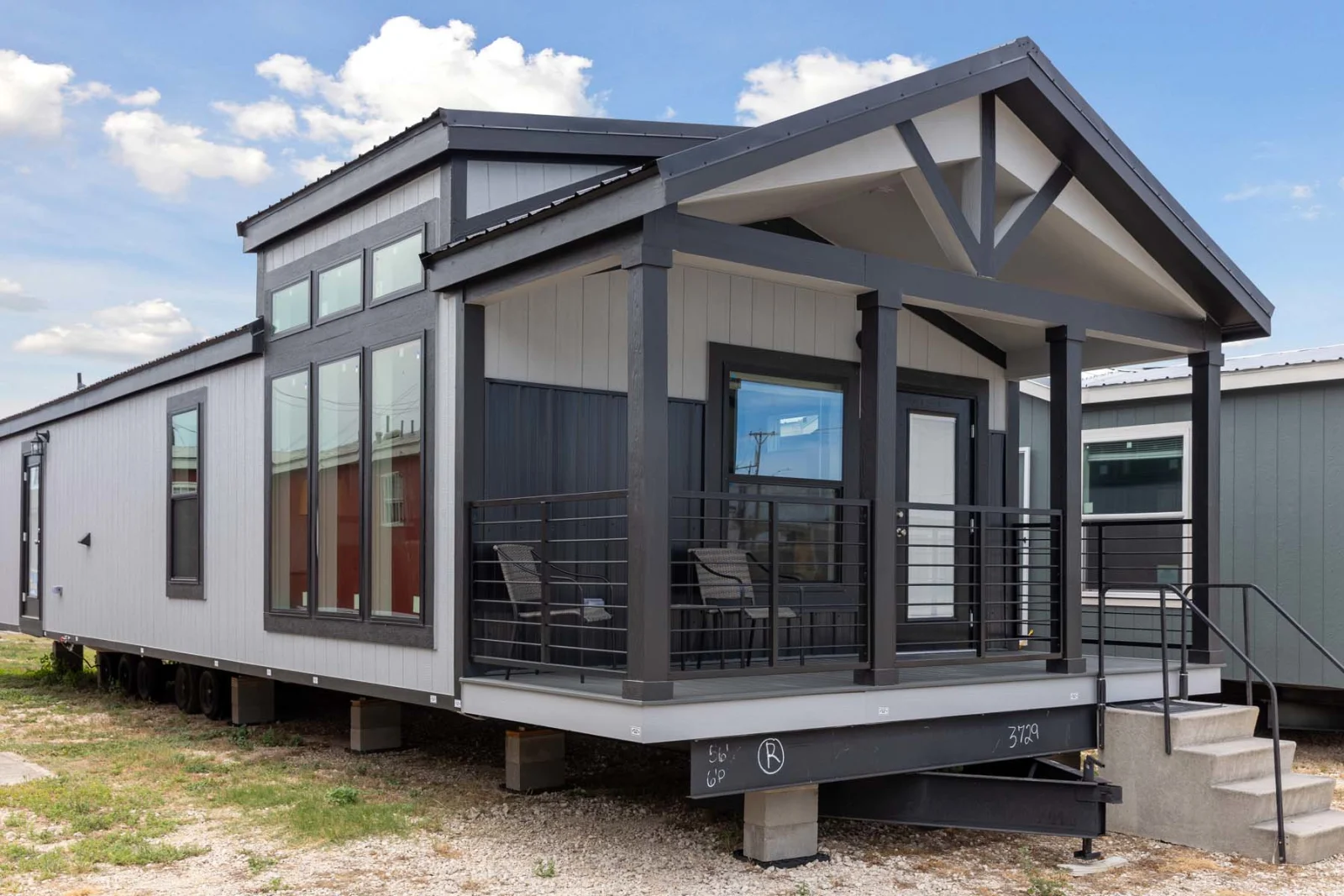
Quick answer
To prepare your site for tiny home delivery, you must ensure a level foundation (gravel pad or concrete), clear a 12-15 foot wide access path for the delivery truck, and have your utility hookups (30/50 amp electric, water, and septic/sewer) pre-installed. Proper site prep prevents costly delivery delays.
Why site preparation matters more than you think
In our experience delivering 500+ tiny homes nationwide, the #1 cause of delayed move-ins is incomplete site prep. Not financing. Not production delays. Site prep.
When your home arrives on a flatbed truck, the delivery crew has a 4-8 hour window to unload, position, and level your home. If the pad isn’t ready, if the access path is too narrow, or if utility stubs aren’t at the right location — the crew can’t finish. You pay storage fees ($150-$300/day) while you catch up.
This guide gives you the exact 7-step checklist our delivery team sends to every buyer 6 weeks before their delivery date.
Step 1: Confirm your foundation type
Your foundation depends on your home type and local code:
- Gravel pad — most common for park models. 6 inches of compacted 3/4-inch crushed limestone, sized to your home footprint plus 2 feet on each side. Cost: $1,500-$3,500.
- Concrete slab — required for HUD-certified manufactured homes in most jurisdictions. 4-inch reinforced slab with anchor bolt pattern. Cost: $3,500-$7,000.
- Pier and beam — common in flood zones or sloped terrain. Concrete piers at specified intervals. Cost: $2,500-$5,000.
We provide a foundation specification sheet with exact dimensions and anchor-bolt patterns 8 weeks before your delivery date. Give this to your concrete contractor verbatim.
Step 2: Clear a 14-foot-wide delivery path
The transport truck and trailer need a minimum 12-foot-wide clear path from the road to your pad. We recommend 14 feet to account for mirror clearance and turning radius.
Check for: low-hanging branches (minimum 14 feet vertical clearance), tight turns (the trailer is 60-70 feet long), soft ground (rain turns dirt roads to mud — lay gravel if needed), and any gates or posts that need temporary removal.
Step 3: Install utility hookups at the pad edge
Before delivery, these must be in place at the pad edge (not 50 feet away — at the pad):
- Electrical: 200-amp panel with 30/50 amp RV-style outlet OR direct wire conduit. Licensed electrician required.
- Water: 3/4-inch supply line with shutoff valve at the connection point.
- Sewer/septic: 4-inch sewer stub within 10 feet of the home’s drain outlet, or septic tank connection.
- Propane (if applicable): 250-500 gallon tank set and charged by a licensed propane supplier.
Step 4: Pull your placement permit
Most counties require a placement or building permit. Processing times vary wildly:
Start your permit application the day you confirm your order. Don’t wait for the home to be built.
Step 5: Schedule utility connections for delivery week
Coordinate with your electric co-op, water utility, and septic installer so hookups happen within 48 hours of delivery. Our setup crew handles the connection to the home — but the utility service to the pad must be live.
Step 6: Prepare your tie-down and leveling materials
For park models: we install tie-down anchors and level the home on delivery day. You don’t need to buy anything — our crew brings all hardware.
For manufactured homes on permanent foundations: your concrete contractor must install J-bolts or anchor plates per our spec sheet before the home arrives.
Step 7: Be present for the walk-through
On delivery day, we do a full walk-through with you: every door, window, appliance, plumbing fixture, and electrical circuit. Any deficiencies are logged and scheduled for repair under warranty. You sign off, get your keys, and you’re home.
Professional insight: the 3 mistakes that delay 80% of move-ins
Information gain
- Mistake #1: Utility stubs too far from the pad. We see this on 30% of first-time buyers. If your water line terminates 40 feet from the pad, you’re paying a plumber $800-$1,500 to extend it. Get stubs within 5 feet of the pad edge.
- Mistake #2: Ordering the pad before receiving our spec sheet. Every model has different anchor bolt patterns and connection points. If your slab is poured to generic dimensions, it may not match. Wait for our spec sheet.
- Mistake #3: Not checking the delivery path after rain. A path that’s fine in dry weather becomes impassable after 2 inches of rain. Lay 6 inches of gravel on any unpaved sections.
Proper site prep means your delivery day is smooth, your setup is complete, and you’re sleeping in your new home that night. See our full delivery process and use our free consultation to get a personalized site-prep checklist for your specific property and model.